Most trackers guess your sleep from how much your wrist moves. But Sleep's real signals aren't in your hands — they're in your breath and heartbeat. Sleepal reads those directly, without touching you. Wrist movement is a proxy. Breath and heartbeat are the source.
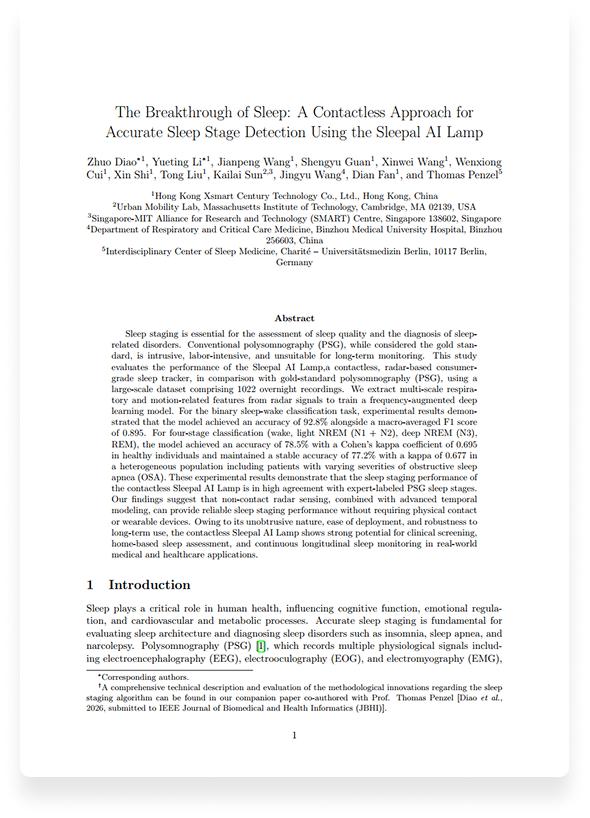
Sleepal’s clinical study achieved Kappa scores[1] exceeding top-tier wearables, as demonstrated in our peer-reviewed study accepted for publication.
Sleepal
0.695
Apple Watch
0.680
Oura Ring
0.650
Research link: doi.org/10.1088/1361-6579/aeb104* Cohen's Kappa coefficient is the widely accepted accuracy metric in sleep staging research. It measures the agreement between a model's predictions and ground truth, adjusting for chance agreement that inflates simple accuracy. A score of 0.61-0.80 indicates substantial agreement, 0.81-1.00 indicates almost perfect agreement.
Validated by globally recognized sleep expert
Most trackers guess your sleep from how much your wrist moves. But Sleep's real signals aren't in your hands — they're in your breath and heartbeat. Sleepal reads those directly, without touching you. Wrist movement is a proxy. Breath and heartbeat are the source.
Prof. Dr. Thomas Penzel
IEEE Fellow
President of World Sleep Society
Scientific director of the Interdisciplinary Center for Sleep Medicine at Charite - Universitatsmedizin Berlin (Germany)
Dr. Thomas Penzel co-authored the paper and comments as this
This study demonstrates the strong potential of a large and innovative AI model for advancing contactless sleep monitoring. It suggests a promising avenue for future research and applications in sleep and home health, and I look forward to our continued academic collaboration in this field.
How Sleepal Works
How Sleepal sees your sleep
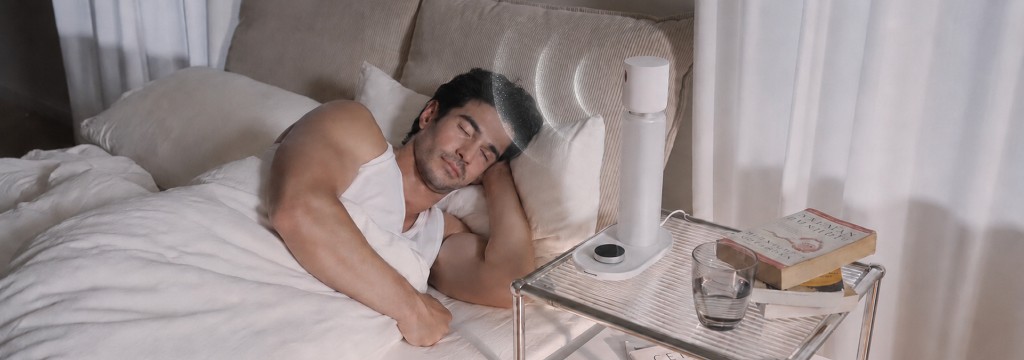
Inside every Sleepal AI Lamp is a 60 GHz millimeter-wave radar — resolution down to 0.1 mm. Precise enough to sense your chest rise and fall with each breath, even with the heavy blanket. Part of the signal reaches deeper, picking up your heartbeat.
Three-up feature row:
Contactless, all night. Nothing to wear, charge, forget, or lose.
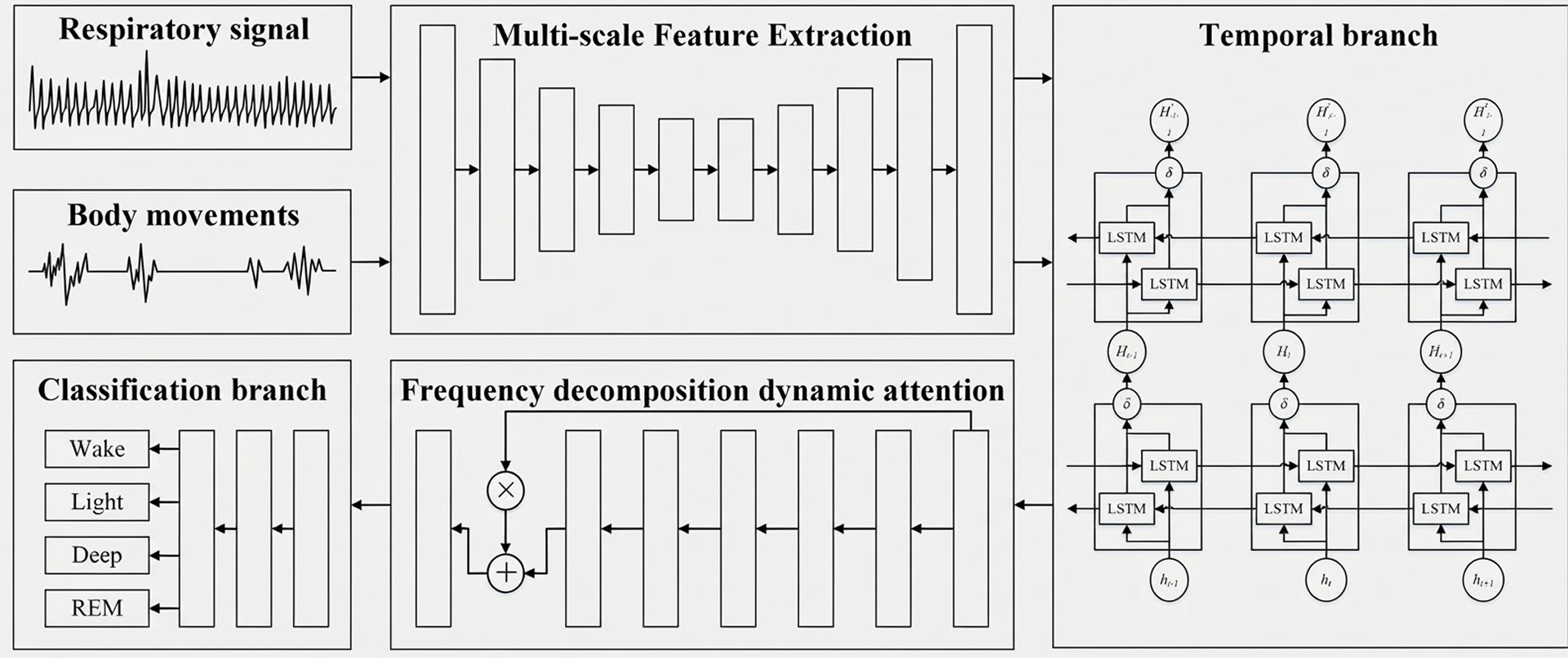
Raw breathing and heart-rate signals are only the start. Reading them as accurate sleep stages takes a purpose-built model: a deep neural network with nearly 100 million parameters, trained on 2,000+ nights of clinical polysomnography (PSG) from leading hospitals.
PSG is the gold standard for sleep staging — the physician-scored overnight test sleep medicine treats as ground truth. By recording with Sleepal and PSG on the same sleepers at the same time, we taught the model the breathing and heart-rate signatures behind each stage: Awake, Core, REM, and Deep.
Stat strip:
2,000+ clinical PSG nights in training
~100M parameters in the sleep model
4 stages scored nightly: Awake · Core · REM · Deep
Beyond Sleep Stages
the whole night, the whole room
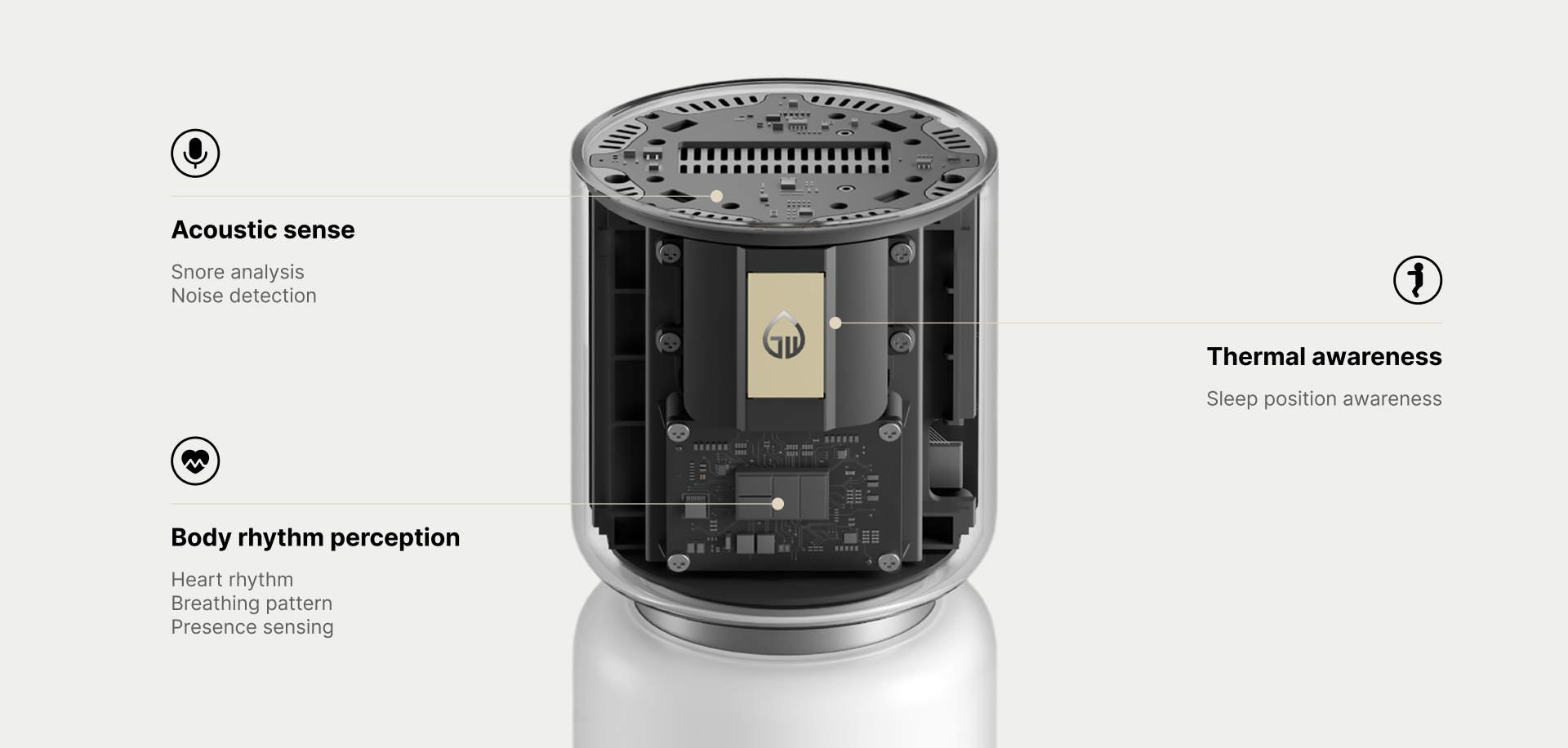
Stages are just the start. Sleepal uses a suite of sensors to capture everything that shapes a night — and reads them together.
Posture. A thermal-array sensor tracks how you lie — back, side, or front — the only consumer sleep tracker that quantifies position this way. Temperature & humidity. Whether your room is helping or hurting your sleep.
Ambient light. Stray light that pulls you out of deep sleep, made visible. Sound. Snoring and noise, flagged as factors in your night. Multi-person separation. Share a bed? Sleepal locks onto the sleeper closest to it and filters out a partner's signals — your report stays yours.
By measuring the body and the room, Sleepal connects cause to effect — not just how you slept, but why.